


Overview
Custom Store Listings let you create targeted marketing campaigns with tailored app presentations on Google Play and App Store. This feature integrates seamlessly with Linkrunner, allowing you to direct different audience segments to specialized store listings with unique screenshots, descriptions, and promotional content.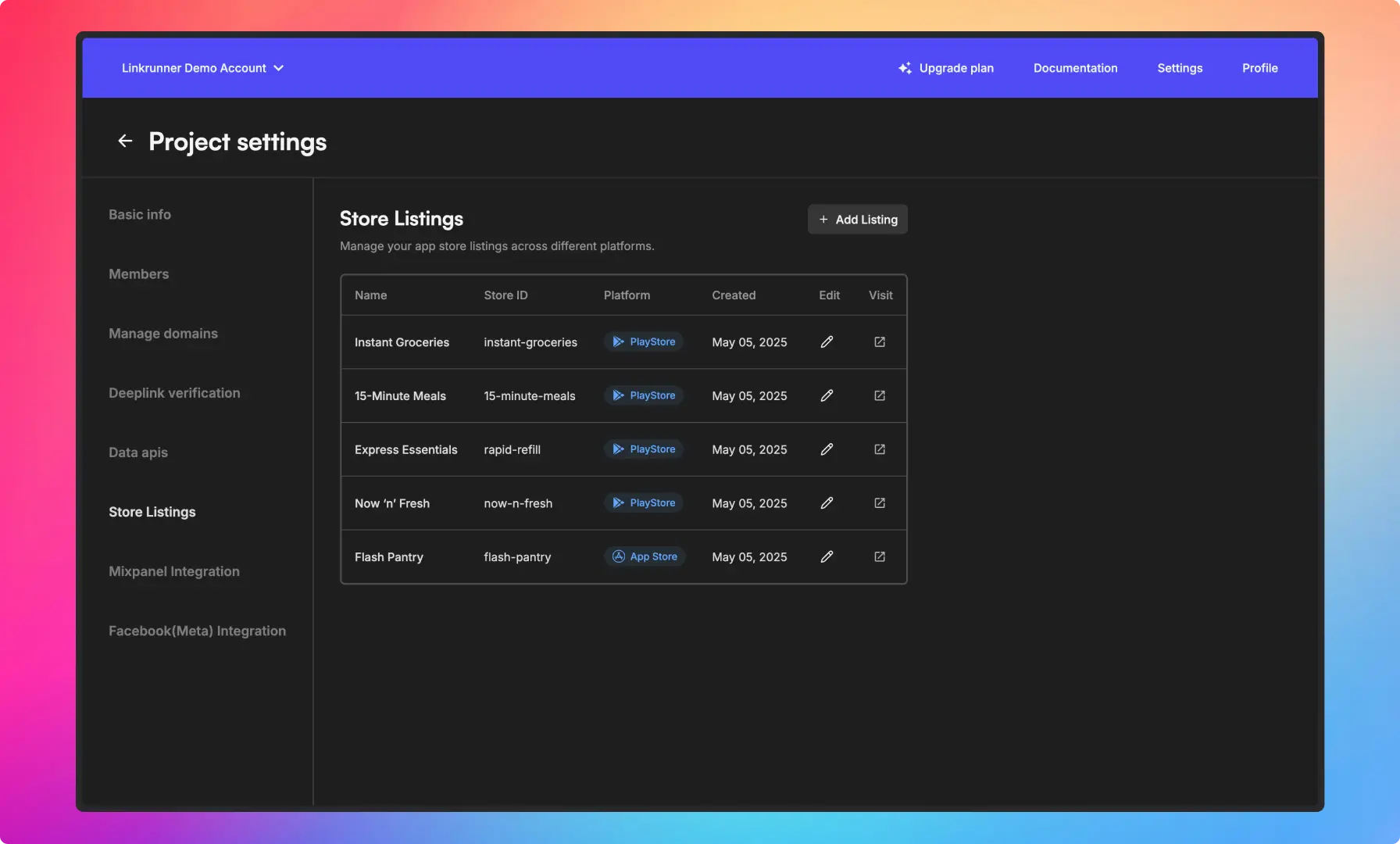
Custom Store Listings
A custom store listing is a separate version of your app’s store page with different screenshots, descriptions, and promotional content. It is not the same as your regular/default Play Store or App Store link.Google Play - Custom Store Listings
On Google Play, custom store listings are alternate versions of your store page targeted at specific audiences. When you create one in the Google Play Console, it generates a URL with alisting parameter:
&listing=your-custom-listing-id part is what makes it a custom store listing.
Google Play Documentation
Learn how to create custom store listings in the Google Play Console
App Store - Custom Product Pages
On the App Store, these are called Custom Product Pages. When you create one in App Store Connect, it generates a URL with appid parameter:
?ppid=your-custom-page-id part is what makes it a custom product page.
Apple Documentation
Learn how to create custom product pages in App Store Connect
How It Works
When creating a marketing campaign, you can specify a custom store listing for users to be directed to when they click on your campaign link. The system automatically appends the correct parameters to the store URLs. This allows for targeted marketing campaigns with different store presentations for different audience segments.Setting Up Custom Store Listings
Step 1: Create a Custom Listing on Google Play / App Store
Before adding a custom store listing to Linkrunner, you need to create one on the respective platform first:- Google Play: Go to Google Play Console → Store presence → Custom store listings → Create custom store listing
- App Store: Go to App Store Connect → Custom Product Pages → Create custom product page
listing parameter (Google Play) or ppid parameter (App Store).
Step 2: Access Store Listings in Linkrunner
Navigate to the Store Listings section in your project settings:- Go to https://dashboard.linkrunner.io/settings?s=store-listings
- Or access it through Settings → Store Listings in the navigation menu
Step 3: Add the Custom Store Listing
- Click on the ”+ Add Listing” button
- Fill in the required information:
- Name: A descriptive name for your store listing (e.g. “Holiday Campaign - US”)
- Store Listing Link: The full URL of your custom store listing including the
listingorppidparameter
- Click “Create” to save your store listing
Linkrunner will automatically extract the custom listing identifier from the URL. If you see an error, make sure your URL contains the
listing (Google Play) or ppid (App Store) parameter.Step 4: Manage Your Store Listings
From the Store Listings dashboard, you can:- View all your existing store listings
- Edit listings by clicking the edit icon
- Visit the actual store page by clicking the visit icon
- Delete listings when they’re no longer needed
Using Custom Store Listings in Campaigns
When Creating a Campaign
- Start creating a new campaign as usual
- Expand the “More options” section
- Navigate to the “Redirect to a custom store listing” option
- Select your desired store listing from the dropdown menu
- Complete the campaign creation process
Best Practices
- Create Targeted Listings: Design different store listings for different audience segments or marketing channels
- Track Performance: Compare conversion rates between different custom store listings to optimize your marketing strategy
- Update Regularly: Keep your custom store listings fresh with updated screenshots and descriptions
- Combine with Deep Linking: For the best user experience, pair custom store listings with deep linking to create a seamless journey from ad to in-app content
For any questions or assistance with setting up custom store listings, please contact us at darshil@linkrunner.io.